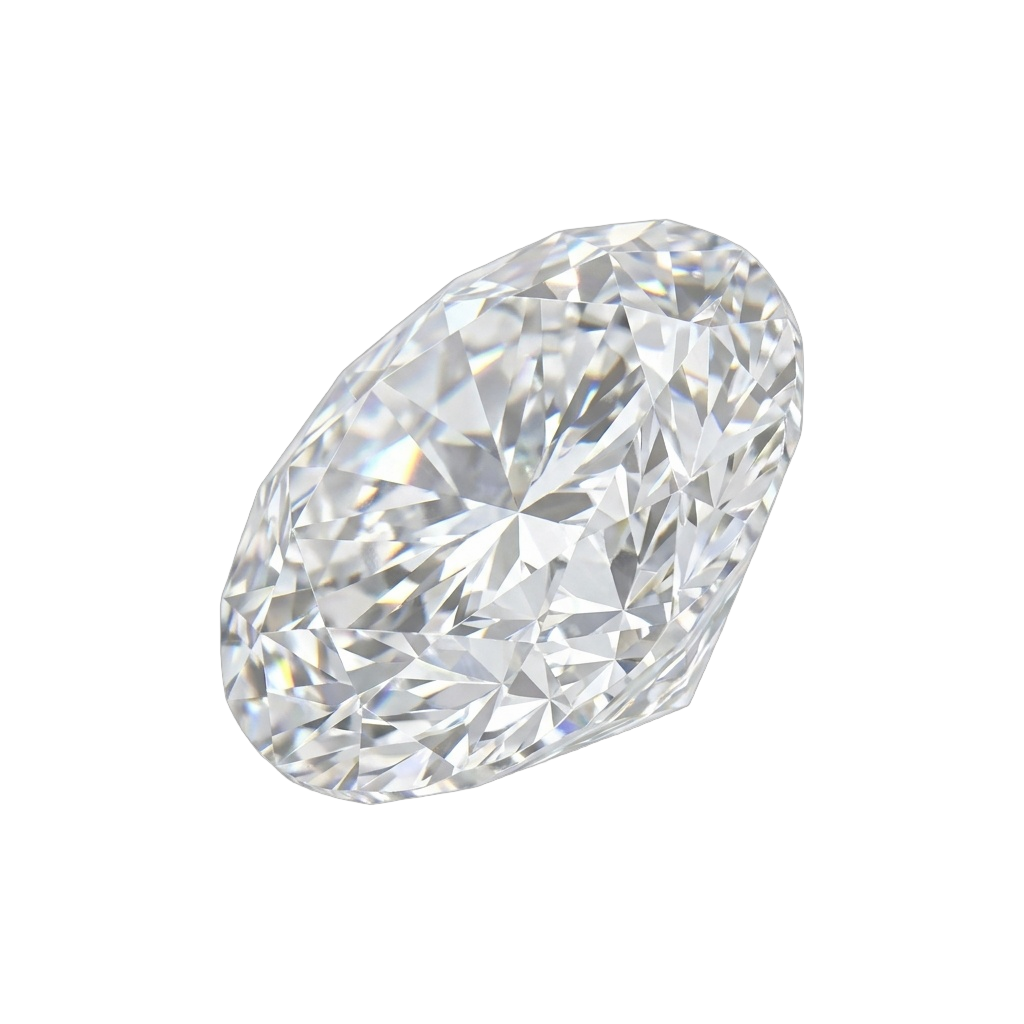
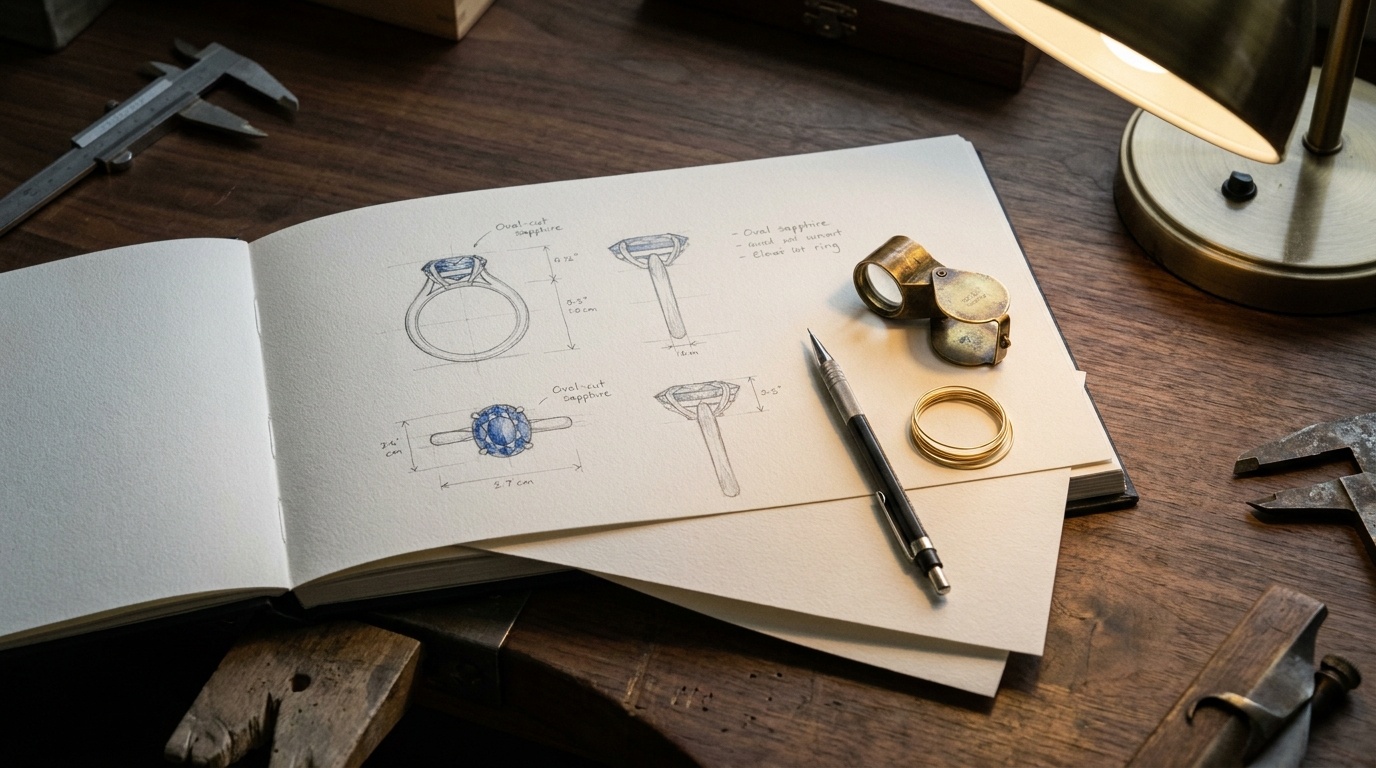
The brief was precise in feeling if not in dimension. An oval sapphire, mid-century, of uncertain provenance but certain history: three generations of the client's family had held it. The previous setting no longer suited its bearer. The request was not to modernise the stone, which would have been a misreading, but to set it in something that felt as though it had always been its rightful home.
The first conversation was about listening rather than proposing. When a client brings a stone with this kind of history, the temptation is to meet the weight of the brief with elaboration: to add, to complement, to demonstrate. The showroom team's instinct, honed through many such commissions, was the opposite. The sapphire was the piece. Everything else was architecture in service of it.
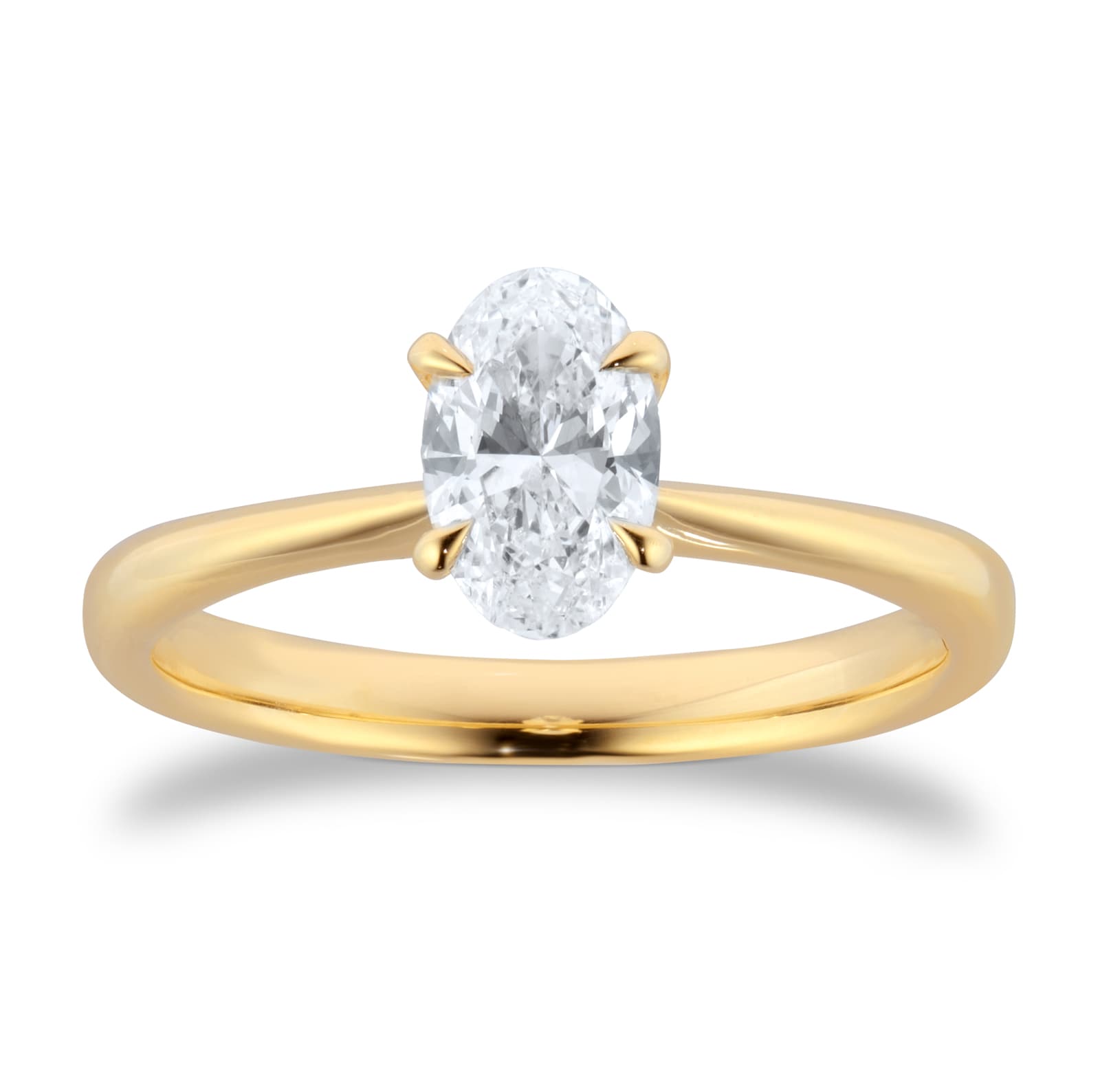
Yellow gold emerged not as a trend reference but as a material logic. The sapphire, a deep cornflower blue, has a warmth that white metals counteract rather than complement. Yellow gold, by contrast, does something almost alchemical: it deepens the perceived saturation of the stone, pulls the blue slightly towards violet, gives the whole assembly a cohesion that reads as inevitable rather than designed. The client had not considered yellow gold. By the end of the conversation, she could not imagine anything else.
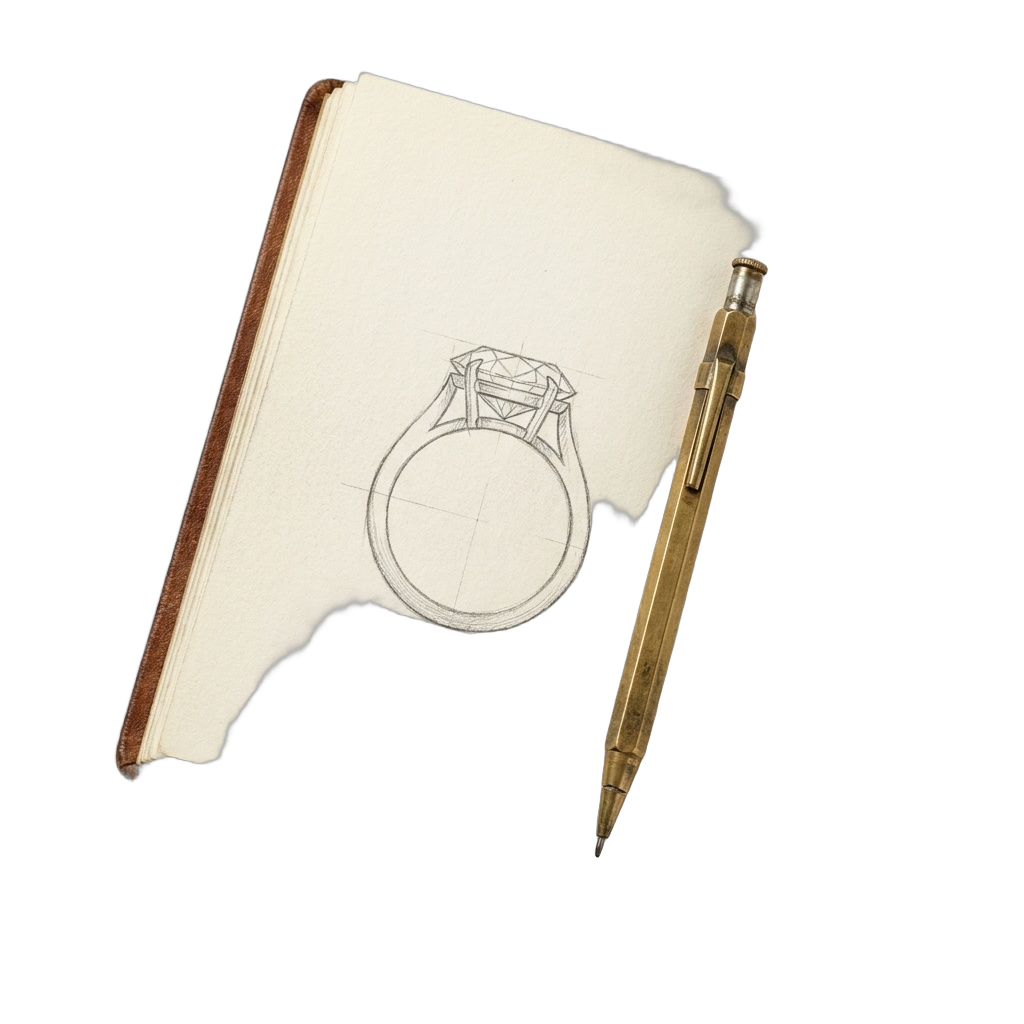
The technical question was the setting. A sapphire of this age and this cut, transitioned through multiple earlier settings, requires examination before any work begins. The team assessed the stone for existing stress fractures, considered the prong geometry that would secure it without placing undue pressure on its girdle, and proposed a claw setting with six points rather than four: a small distinction, but one that distributes the holding force more evenly and reduces the risk of movement in daily wear.
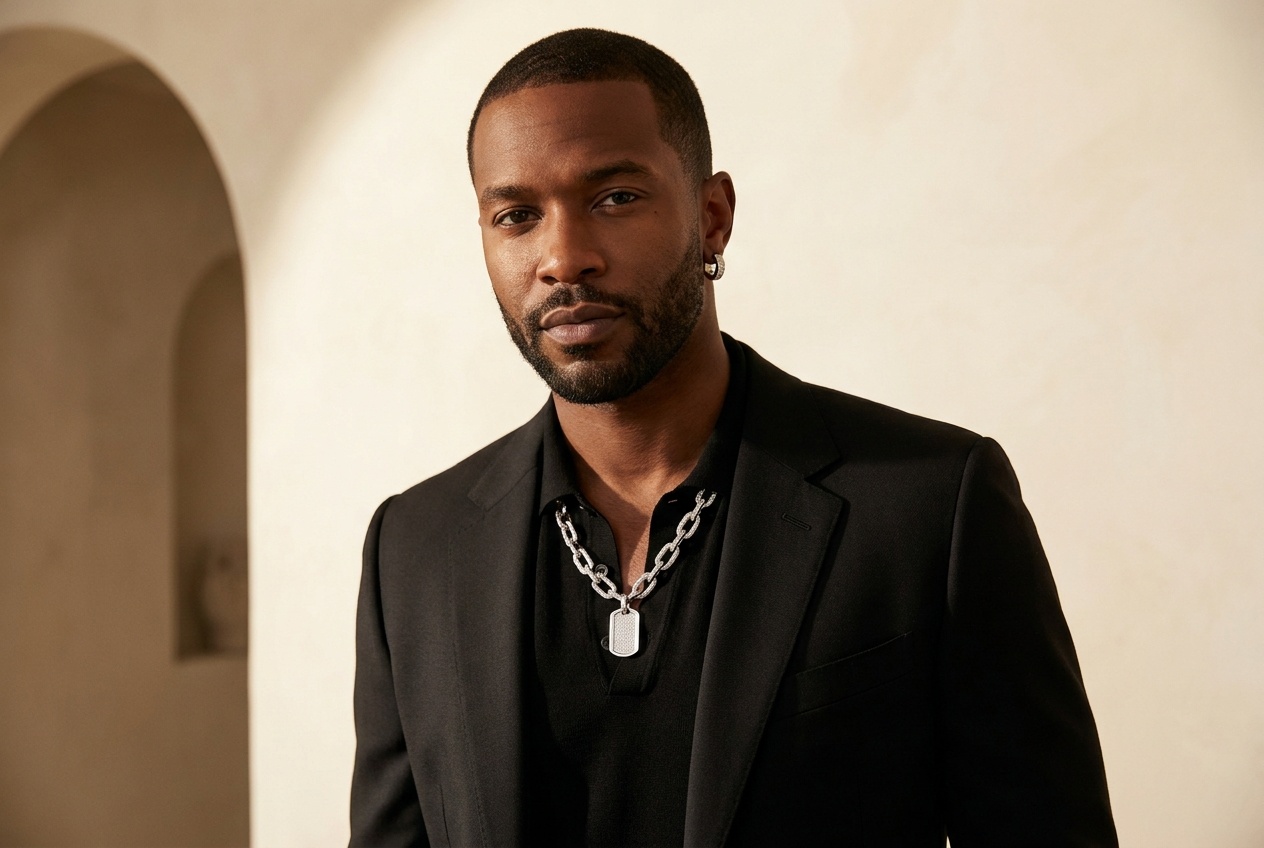
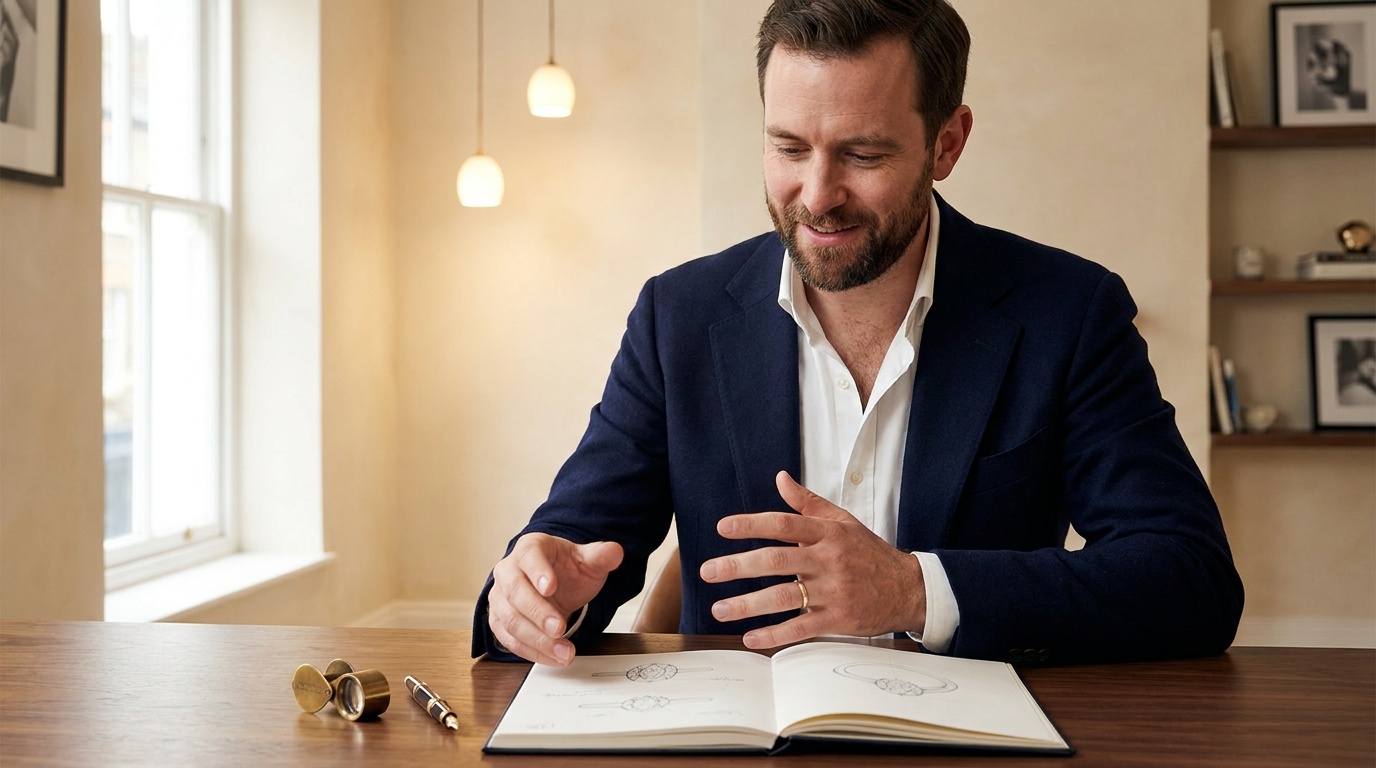
The sketch took two iterations. The finished piece, in 18ct yellow gold, was collected six weeks later.
Bespoke consultations are by appointment. Speak to a member of the team to book.